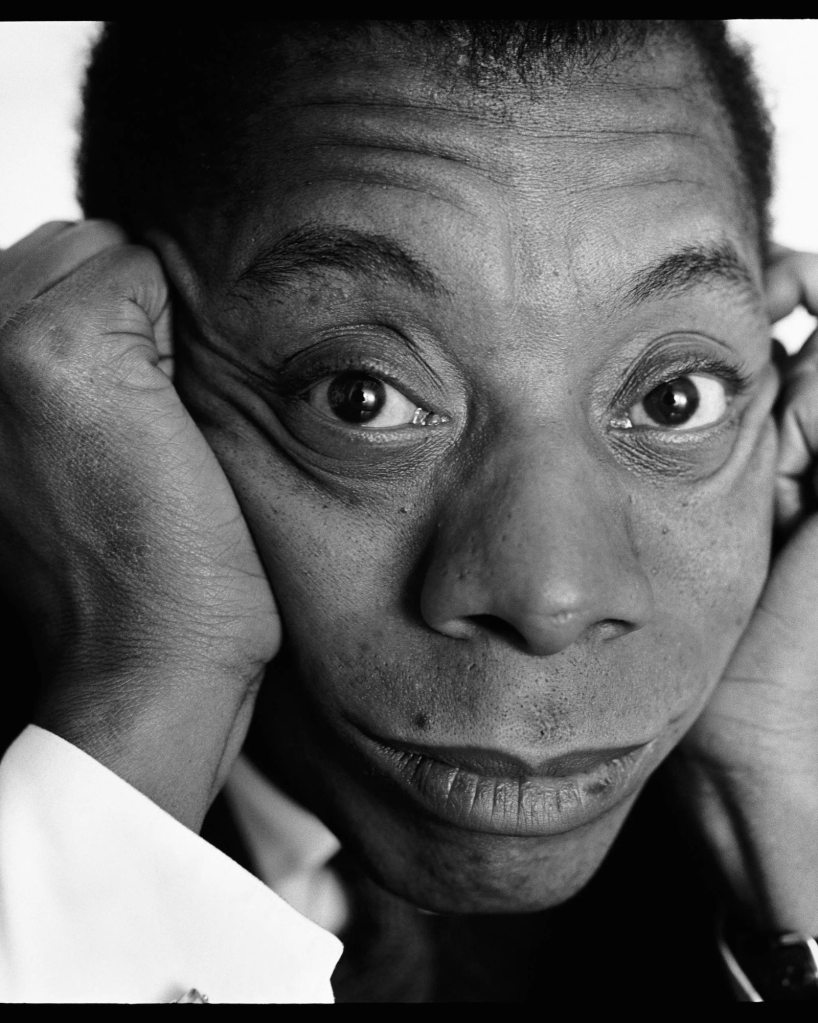
Recently, the Trump administration launched an attack on the Smithsonian and other government funded institutions that hold space for minority representation, claiming “there has been a “concerted and widespread’ effort over the past decade to rewrite American history by replacing ‘objective facts’ with a ‘distorted narrative driven by ideology rather than truth,’ adding that it casts the ‘founding principles’ of the United States in a ‘negative light’.”1 It should be noted that the Obama presidency falls within the decade Trump points to as problematic, and clearly he (and others like him) will never get over it. Let us also recall that in his essay “Many Thousands Gone,” James Baldwin wrote,
The story of the Negro in America is the story of America — or, more precisely, it is the story of Americans. It is not a very pretty story: the story of a people is never very pretty. The Negro in America, gloomily referred to as that shadow which lies athwart our national life, is far more than that. He is a series of shadows, self-created, intertwining, which now we helplessly battle. One may say that the Negro in America does not really exist except in the darkness of our minds2 (emphasis added).
With that in mind, it is important that Black people not perceive what is happening as an irremediable assault on the existence of truth—our truth—but rather, that we correctly identify white supremacy’s anxiety over the evils of its own identity for what it truly is. This is an identity crisis—irrefutable evidence of White America’s inability to face itself, its pronounced disgust with the truth of its actions. Every effort is being made to purify White history through the suppression of Black history precisely because White America is revolted by the facts of what it has done, the foundations of its identity, and the all too apparent truth that its power is, and always has been, the product of immoral and anti-Christian violence. Its own history indicts its lies of supremacy, greatness, and exceptionalism, revealing it to be not much more than the hypocritical and bloody result of racial anxiety masked as an egoistic veneer of faux pride and shamelessness.
Initially, I was disturbed by Trump’s actions, but I had to quickly re-examine my grief and shift it to where it actually belongs. All weekened I heard an echo from Notes of a Native Son in my head. There, Baldwin declares, “hatred, which could destroy so much, never failed to destroy the one who hated, and this is an immutable law…I imagine one of the reasons people cling to their hate so stubbornly is because they sense that once hate is gone, they will be forced to deal with pain.”3
The underlying truth White supremacist America struggles to reconcile within itself is that blood, death, and immorality has been, and still is, inextricably imbedded in the constitution of its identity. And for that matter, to declare as Trump has, that its history of slavery, lynching, Jim Crow, deprivation of minority rights, racism, and racial inequality is a distortion is an outright lie attempting to distort America’s perception of itself. The assertion that truth casts the founding principles in a negative light is only an attempt to evade accountability and reckoning, which has long been the psychological sickness that has keeps our society from achieving alignment with its purported principles. The illness within has both supported and sustained the ill condition that persists throughout this country. Rather than deal with its festering and infectious condition, “America” prefers to avoid any semblance of a healing confrontation, because that confrontation requires honesty and confession.
The first step to getting better is always acknowledging that you are sick in the first place. This is the true nucleus of the racist and the Trumpian pathology—it is not that they can’t stand the sight or remembrance of black people, it is simply that they cannot stomach remembrance of themselves, and the shortest route to remedying their internal dis-ease, seems to be removing every mirror that forces them to look at themselves. We are witnessing cancer that does not want to face its diagnosis; brokenness that prefers to limp.
Most often we focus on the pain that the racist causes. Baldwin asked us to consider that the racist is, himself, in pain—that it must be a terrifyingly painful experience to depend on another’s identity to sustain your own, and to be incapable of acknowledging that dependency, to be the child fighting in every way to distance himself from his parentage, struggling to declare himself all grown up when everything about his actions suggests that he is, as Baldwin would say, paralytically infantile4.
The Trump administration would argue that Black America needs to get over its history and integrate itself firmly into a diabolically dishonest national narrative. The truth of the matter is, Black America cannot move beyond its history because White America has never moved beyond its own. That would require some growing up, some maturing into the love ethic boasted as foundational to the alleged Christian ideals and principles it perverts every single day. If this is in fact a Christian nation, I can only reconcile that by acknowledging that slavery, racism, racial supremacy, and violence are all strewn throughout the biblical narratives used to prop up the twisted moralism used by white supremacist Christians to justify their fearful hatred. And this forces me to question whether what we’re really talking about is misidentification or exact and problematic interpretation. But perhaps that is a discussion for a different day? It is certainly not one Americans—most especially Black American Christians—are ready to have.
These assaultive acts, which are only contemporary manifestations of old fears, reveal that the entirety of this “Great Again” era is built upon lies that some others have told themselves about who they are because it would be too painful to confront who they have been. Viewed through that lens, I am not moved to fear or anger by efforts to erase the darkest parts of American history, I am actually moved to a profound pity and sadness—not for me or for black people, but for the people who cannot face themselves. But please don’t misinterpret that my use of pity and sadness suggest any kind of compassionate absolution or pardon, for these things require atonement, and we know that “not everything that is faced can be changed, but nothing can be changed until it is faced.”5
What the Trump administration is doing is nothing more than a manifestation of a kind of disociative identity disorder, wherein, faced with an overwhelming experience, the national consciousness has chosen to reformulate itself in a manner it believes is capable of managing a perceived and overwhelming threat—a presence that alerts it to its own profound weakness. It is important to remember, that Black people are not the threat and they never have been. Be sure, the history of black people, which IS American history, is a source of American weakness because it refuses the lie of American exceptionalism this country has been committed to for centuries. It reminds us that a country can never be greater than the condition of its most despised people.
I hold that the proper response to this plague of dishonesty, this epidemic of denial, is not fear. Fear would only reduce us to the same troubled condition as those who are afraid of us. It would only make us vulnerable to the sickness and psychological deterioration that plagues those who cling to an irrational need for purity because fear can never accomplish more than dehumanization and the deceptive destruction of strength. What this country fails to realize is that you cannot erase a history you spend every day recreating. History is happening now. That history testifies against America. That history is embedded in the everyday experiences of black bodies, and it is inescapable and permanent. We cannot forget black history any more than we can forget that we are black; it lives with and in us. This is not a time to be afraid, but rather, a time to fill ourselves with remembrance and awareness.
In our everyday experiences, when we witness individuals attempting to escape and reinvent themselves, we commonly note that the individual who must do so is filled with hatred for his or her self. That is the truth of this moment. We are not witnessing a country in love with itself, but one that hates itself, one that is ashamed of itself, and that is an immensely sad condition. America wants to be something other than what it is, and it can be, but not through fruitless repackaging and escapism. That can only happen when there is willfull and intentional confrontation. To simply admit, this is what we have done … and it was wrong, would do so much to heal this otherwise grief-stricken country. I say grief-stricken because this country is trapped in the ever-growing grief of its dead moral compass, the foundational loss of its humanity, and the death of its capacity for love and decency. This is not a decent place, for guilt and decency cannot peacefully co-exist.
We must know that attempts to erase our history are not the same as an erasure of racism. Racism is alive and well; it will be with us for as long as efforts to escape the reckoning persist. In fact, this movement does more to deepen the wound of racism than it could ever do to quell its riotous protest against injustice. Will there be consequences related to this revisionist movement? Absolutely. Should we be concerned about the provision of comprehensive historical education for the generations to come? Yes. That is why in such a time as this, it is the duty of every black person to, in a commensurate manner, increase their knowledge and awareness of who we are and what we have survived. That knowledge provides the energy that can propel us forward. We must remember who we are, and we cannot allow anyone else to tell testify for us .
Every morning I journal. When I do, each day I write a set of affirmations of identity for myself. Repeatedly, I write “I am not defined by the worst things that have happened to me, nor by the worst things I have done, but by the resilience I have displayed in rising above and growing from those awful moments.”
America … we are still waiting to see your resilience and your growth.
- Superville, Darlene. “Trump Executive Order on Smithsonian Targets Funding for Programs with ‘Improper Ideology.’” AP News, AP News, 28 Mar. 2025, apnews.com/article/trump-smithsonian-executive-order-improper-ideology-558ebfab722f603e94e02a1a4b06ed4d.
↩︎ - Baldwin, James, and Edward Jones. Notes of a Native Son. Beacon Press, 1955.
↩︎ - Baldwin, James, and Edward Jones. Notes of a Native Son. Beacon Press, 1955. ↩︎
- Here Be Dragons James Baldwin, http://www.cusd80.com/cms/lib/AZ01001175/Centricity/Domain/1073/Full%20Text%20Here-be-Dragons-James-Baldwin.pdf. Accessed 31 Mar. 2025.
↩︎ - Baldwin , James. “As Much Truth As One Can Bear.” The New York Times , 14 Jan. 1962, p. BR11.
↩︎
Discover more from
Subscribe to get the latest posts sent to your email.
 altariqmoore.com